
How School Farm Programs in Samford Valley Encourage Healthy Eating Habits
Summary: School farm programs help children develop healthy eating habits by connecting them with where food comes from through hands-on, sensory learning. When children discover food growing in a real farm setting, nutritious choices become natural — not forced. Green Thumb Farm's education programs in Samford Valley are building this connection with more than 950 students in 2025 alone.
In 2024, just 3.1% of Queensland children met the daily recommended vegetable intake — a striking figure from the Report of the Chief Health Officer Queensland. Yet research consistently shows that children who connect with where food comes from are far more likely to eat it. That's the heart of what we do at Green Thumb Farm.
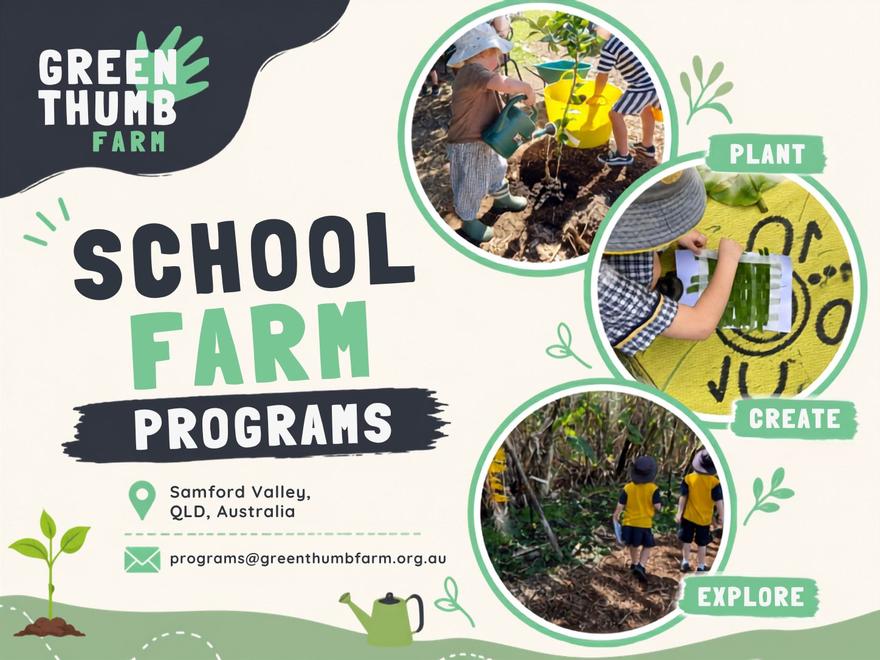
Our school excursion and incursion programs bring children to the farm — or bring the farm to them — for hands-on learning grounded in sustainable, chemical-free growing. We're not just teaching students what a carrot looks like. We're helping them understand food, health, and their place in the natural world.
Here's how it works.
Role of School Farm Programs in Promoting Healthy Eating
Connects Children with Food Sources
Most children have little idea how the food on their plate was grown. Our programs bridge that gap. Through guided walks across our Samford Valley property, students observe crops at different stages of growth, explore kitchen gardens bursting with herbs and edible flowers, and learn about sustainable farming practices that work with nature rather than against it.
When children see food growing in real soil, tended by real people, something shifts. Fresh produce stops being something abstract on a plate and becomes something alive and meaningful — and far more worth eating.
Encourages Hands-On Learning
Research shows children are far more likely to eat fruits and vegetables when they've had a hand in growing them. In our programs, students plant seeds, explore herbs up close, and often take home seedlings to tend at home. That personal involvement creates a genuine sense of ownership — and with it, real curiosity about what they're eating and where it came from.
Across our 2025 school programs, 75% of participants reported increased food growing knowledge, and 64% left with a greater awareness of healthy eating and seasonal food choices.
Makes Healthy Foods Appealing
There's something quietly powerful about touching a leaf and catching its scent on your fingers, or discovering an edible flower for the very first time. Our programs invite students to engage with healthy foods through their senses — smelling fresh herbs, exploring a working kitchen garden, and getting close to produce they'd never given a second thought to before.
These hands-on, discovery-based experiences can do more to shift a child's relationship with vegetables than any classroom lesson. Nutritious food becomes something to be curious about, not something to push to the side of the plate.
Builds Knowledge About Nutrition and Sustainability
Our educators guide students through the full journey from soil to plate — exploring the benefits of fresh, seasonal food, the science of composting, the role of pollinators, and why healthy soil is the foundation of everything we eat. Students come away with a clearer picture of how the food we choose connects to how the land is managed, and how both connect to our own health and wellbeing.
We draw on organic growing principles and chemical-free farming methods throughout, giving students a grounded understanding of food production that goes well beyond what they'd find in a textbook.
For many children, it's the first time those dots have been joined.
Develops Life-Long Healthy Habits
Farm education is about more than a single visit. The knowledge and experiences children gain — chemical-free growing, seed collection, composting, plant care — build confidence and capability that stays with them long after they leave the farm.
That single morning in the soil can be the spark that changes how a child sees food, nature, and their own ability to make a difference.
Creates Positive Food Experiences
We believe healthy eating is best taught not through instruction, but through experience. When students work together outdoors, get their hands in the soil, and discover food growing in its natural environment, eating well becomes part of something enjoyable and meaningful — not a rule to follow.
These positive associations travel home with them, shaping the choices they make at the dinner table and beyond.
In Summary
Queensland's own data tells us that children aren't eating enough vegetables — but research and lived experience show us why, and what we can do about it. School farm programs connect children with food at its source, build confidence through hands-on learning, and create the kind of positive food experiences that last a lifetime.
At Green Thumb Farm in Samford Valley, we've seen this transformation in more than 950 students in 2025 alone. If you'd like to bring your class to the farm — or bring our program to your school — we'd love to welcome you. [Explore our school programs here.]
FAQs
How do school farm programs encourage healthy eating habits?
When children see how food is grown and are more connected to it, they are much more likely to make healthy food choices. Farm programs make fresh produce feel meaningful and appealing rather than unfamiliar — and that shift in perspective is powerful.
Why is hands-on learning important in farm education programs?
Hands-on experiences build curiosity, confidence, and a personal connection to food. Research shows children who are involved in growing food make healthier choices — and our own impact data from 2025 backs this up.
What long-term benefits do children gain from school farm programs?
Children develop practical growing skills, a deeper understanding of nutrition and sustainability, and positive food habits that carry into everyday life — at school, at home, and beyond.

0 comments
Leave a comment
Please log in or register to post a comment